.jpg)


.jpg)

 English daily published in Bengaluru & Doha

On-street paid parking: Solution to congestion or a tax burden?
Bengaluru
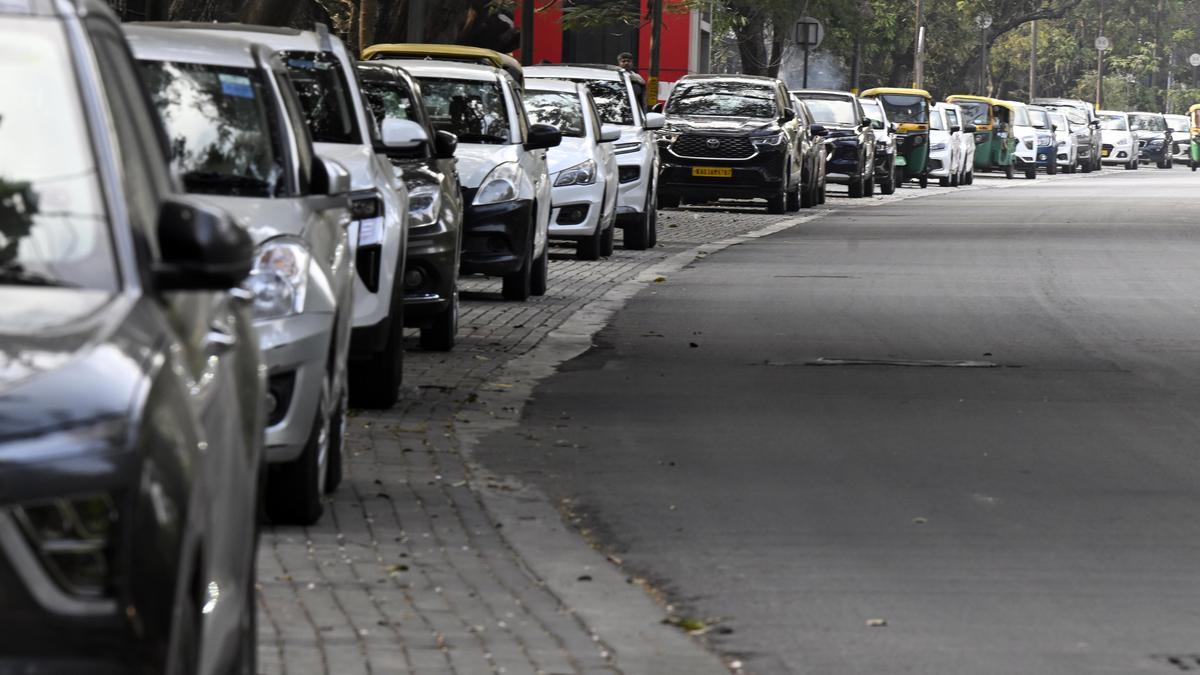
The Karnataka Government’s recent proposal to introduce a paid parking system in Bengaluru, notified through the draft Greater Bengaluru Authority (Parking) Rules, 2026 on August 11, has triggered mixed reactions among experts and residents. Under the proposed rules, parking four-wheelers and two-wheelers in residential and non-residential areas could at tract annual fees ranging from Rs 15,000 to Rs 25,000. While the move is aimed at regulating parking and discour aging the indiscriminate use of public spaces for vehicle parking, it has raised questions about its effectiveness and impact on residents.
In a metropolitan city already struggling with severe traffic congestion, is imposing an annual parking fee the only way to curb the entry of new vehicles onto the roads and tackle unau thorised parking? Or should the government also explore stron ger enforcement, better public transport and more organised parking infrastructure as part of a broader solution? “As an en vironmentalist, I believe people should be encouraged to leave their two-wheelers and four wheelers behind and increasingly opt for public transport, as the growing number of private vehicles is taking a toll on the environment.
So, I believe this is a timely and necessary move”, said environ mentalist Alexander James, wel coming the proposal and adding that citizens should begin travel ling by public transport like Ban galore Metropolitan Transport Corporation (BMTC) and Banga lore Metro Rail Corporation Lim ited (BMRCL) more often. He said the excessive number of vehicles on Bengaluru’s roads is contributing significantly to air pollution, releasing toxins that affect not only human health but also urban wildlife, including birds. Apart from air pollution, ve hicles are also major contribu tors to noise pollution due to the honking sound, which can par ticularly affect vulnerable groups such as children, senior citizens and patients, as well as wildlife.
“Drivers keep honking constantly for no reason. It is frustrating and very loud”, he emphasised. James also pointed to the growing practice of parking ve hicles on both sides of residen tial and non-residential roads, highlighting that such parking often narrows the available road space, particularly on roads with heavy traffic movement, making it more difficult for vehicles and pedestrians to move freely. “My question is, why do people buy cars when they do not have adequate parking space?”, he said, highlighting the biggest Is imposing parking fee the only way to curb entry of new vehicles on the roads? factor of the growing parking crisis.
He pointed out that despite many homes lacking designated parking within their compounds, residents continue to purchase four-wheelers and park them on public roads. Memorandum to CM Sajjan Raj Mehta, Trade activist, has submitted a memorandum to the Chief Minister and Minister of the Greater Bengaluru Author ity (GBA) on behalf of concerned citizens and vehicle owners of Bengaluru, which states that the proposal, in its present form, would place an unfair financial burden on residents. “We recognise that Bengaluru has a serious parking and traffic management problem and that the Government has a legitimate responsibility to regulate pub lic roads, prevent obstruction, protect footpaths and improve mobility.
However, regulation cannot become an excuse for indiscriminate rev enue collection from ordinary citizens”, he said. Mehta pointed out that vehi cle owners already pay several taxes and statutory charges, in cluding road and motor vehicle taxes, registration charges, fuel taxes and insurance costs, while property owners separately pay property tax. “If a citizen is then required to pay an additional Rs 15,000 to Rs 25,000 every year merely to park a legally owned vehicle on a residential street adjoining their home, the Gov ernment must explain what ad ditional service or infrais being provided in return”, he said. He argued that parking charges should not be imposed until adequate and affordable alternatives are in place.
“The principle should be: provide reasonable alternatives before im posing punitive charges”, Mehta said, calling for ward-wise park ing audits covering demand, capacity, public and private parking spaces, deficits and availability of alternative facili ties. The memorandum also urged the Government to strengthen public transport before imposing higher charges on private vehicle users, call ing for better BMTC and Metro services, last-mile connectivity, pedestrian and cycling infrastructure, integrated ticketing and af fordable parking near transit stations. He also sought clarity on li ability if vehicles parked in authorised paid spaces are stolen or damaged.
“Citizens cannot be expected to pay a substan tial parking fee while being told that the authority accepts no re sponsibility for safety of the ve hicle”, he said, seeking provisions on insurance, CCTV surveillance, compensation and grievance redressal. Mehta called for consultations with residents, commercial asso ciations, senior citizens, persons with disabilities, transport ex perts and urban planners before implementing the rules. “Ben galuru needs a parking solution, not a parking penalty regime”, he said, urging the government to adopt an infrastructure-first, transparent and citizen-centric parking policy.




.jpg)
