.jpg)


.jpg)

 English daily published in Bengaluru & Doha

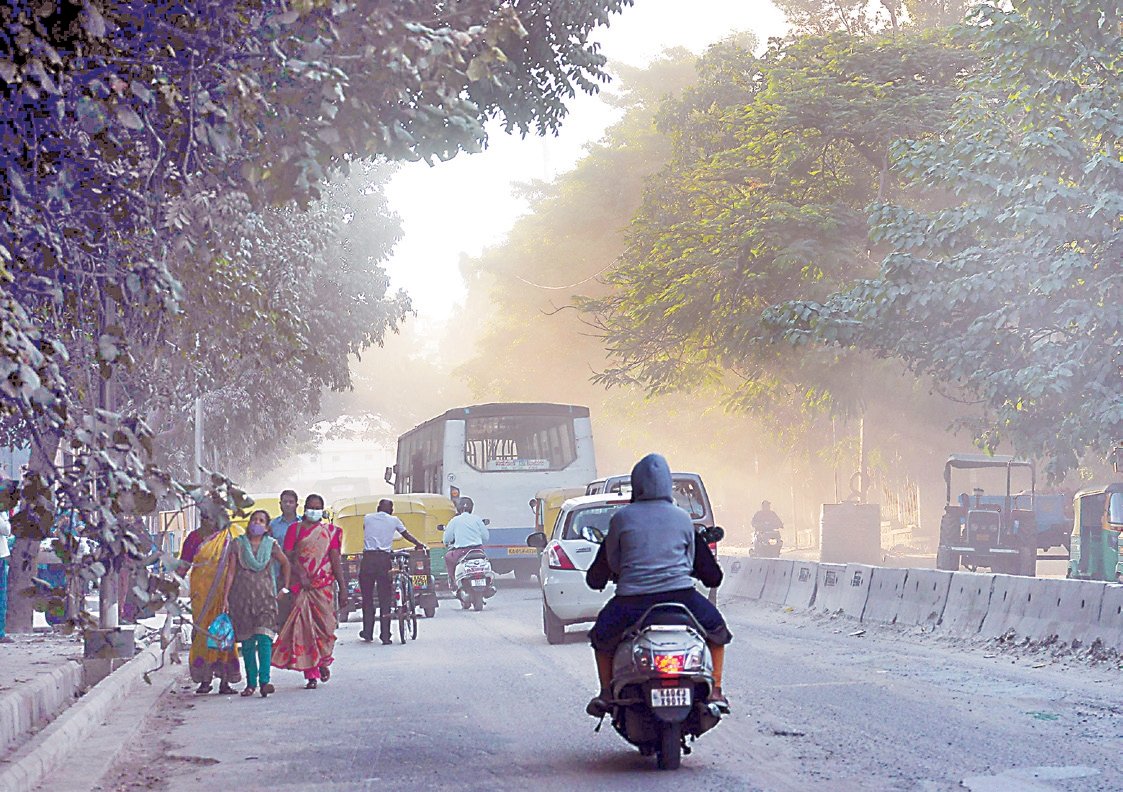
Pregnant women, infants, elderly more vulnerable to India’s worsening air quality: Report
NT Correspondent
Bengaluru
Greenpeace India’s latest report titled “Different Air Under One Sky: The Inequity Air Research” says that even though air pollution is a universal health problem that affects everyone on this planet, the risks are not evenly distributed amongst the population, with some groups of people at greater risk.
The report investigates air pollution in eight countries, including India, by assessing the exposure to air pollution experienced by vulnerable groups of people and the population’s access to air quality monitoring stations.
Air pollution is the greatest environmental risk factor for human health. However, the report highlights how groups known to be particularly at risk from air pollution such as infants, elderly citizens (above 65 years) and pregnant people are more likely to be exposed to high pollutant concentrations and have less access to local air quality data when compared to the total population.
Here are some of the report’s key findings. India has one of the worst air quality, with 95 per cent of the total population exposed to PM2.5 concentrations over 25 µg/ m3, which is five times the WHO annual average guideline. Furthermore, 57 per cent of the total population are exposed to PM2.5 concentrations over 50 µg/m3.
In nine Indian states, more than 90 per cent of the population are exposed to PM2.5 concentrations over 50 µg/m3. Among elderly citizens, 53 per cent are exposed to PM2.5 concentrations over 50 µg/ m3. Around 61 per cent of infants and 62 per cent of pregnant women live in areas with PM2.5 concentrations over 50 µg/m3, compared to 57 per cent for the total population.
On access to local air quality data, 70 per cent of India’s population does not have access to an air quality station within 25 km. In Goa, Lakshadweep and Andaman and Nicobar, the whole population lacks access to an air quality station within 25 km. At the other end, Chandigarh and the National Capital Territory of Delhi provide air quality stations within 5 km to over 9 0 % of their population.
The report also highlights the need to revise India’s current National Ambient Air Quality Standards (NAAQS) based on the latest scientific insight. Additionally, the National Clean Air Programme and the activities planned under it—such as extension of public transport in cities and electrification of government-run public transport—will need to be properly implemented without any further delays.
Avinash Chanchal, Greenpeace India campaign manager, said, “The findings of this report are eye-opening. Considering the size of India, the number of air quality monitoring stations is very low. The real-time information about the quality of the air we are breathing is the first step to understand and address this challenge. It’s high time governments introduce robust air quality monitoring systems across the country and make the data publicly available in real-time. This should be coupled with health advisories and ‘red alerts’ for bad-air days so that the public is able to take necessary steps to protect their health and polluters could be required to reduce emissions to protect the environment.”



.jpg)

